“You’re too young to have this kind of hearing loss and constant ringing,” the audiologist said as she squinted at my chart.
“Do you work in a factory? Around loud machinery? Do you shoot guns?”
No, no, and no.
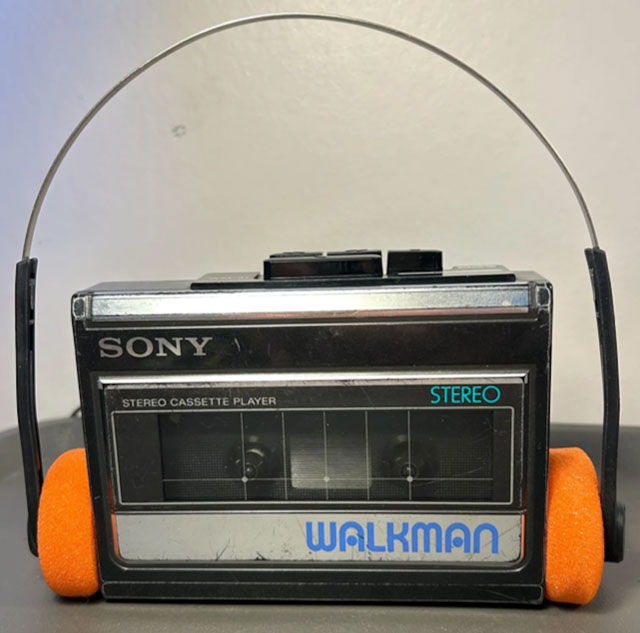
“I listened to really loud music on my Walkman as a kid,” I explained.
She laughed, waving off my answer. “We all did that in the ‘80s.”
But not like I did.
What she, and the three other audiologists I’ve seen, failed to understand is that I wasn’t just a kid cranking tunes for fun. I was an auditory cutter.
At least that’s what I call it. It’s not an official diagnosis, but it should be.
Cutting, in the traditional sense, is a form of self-injury—using razors, knives, or scissors to carve pain into skin—often to distract from deeper emotional wounds.
And I had a lot of emotional wounds. I grew up in a home with an alcoholic mom, a physically and emotionally abusive dad, and a brother who sexually abused me for several years. There was no escape, and I needed a distraction.
So I harmed myself—through sound.
I couldn’t cut my skin with knives or scissors because I played sports. Any marks on my body would have been noticed and questioned. So I found another way to cope with the chaos and trauma inside my home.
I can still feel it.
I sit by the window in my bedroom, basking in the afternoon sun, petting my cat, Tigger, cranking my Walkman to full blast. Not because I love the music, but because I need the pain it delivers.
Classical music works best. The long, high-pitched strings pierce straight through my ears and into the center of my anxiety. Adagio for Strings by Samuel Barber is my go-to.
It starts super soft, almost like a whisper, so I turn the volume to its max and leave it there. I know what’s coming, but I never turn it back down.
As the violins swell into an aching, screeching crescendo, the sound becomes almost unbearable.
That is the point.
At its peak, the violins hold one long, high, punishing note. The strings slice through me, triggering sharp, physical pain in both ears. Then the ringing starts. Loud. Relentless. Long after I take the headphones off.
I sit perfectly still, stunned by the aftershock, my ears burning, my head throbbing.
And only then do I feel better—at least for a while.
I wasn’t listening for pleasure. I was listening for pain strong enough to drown out the confusion, sorrow, and fear that consumed me.
Music wasn’t a refuge—it was a weapon I turned inward, because it was the only thing I could control.
Now, decades later, the damage is permanent.
I have tinnitus—a constant, high-pitched ringing in both ears that never stops.
I’m not alone. Over 25 million adults in the U.S. live with tinnitus. But mine isn’t just a medical condition. It’s an echo of my survival.
The ringing has been a constant reminder of the abuse, and it’s made me so angry. Angry that I couldn’t escape the noise. Angry that I’d harmed myself. Angry that I’d been abused in the first place.
Eventually, I grew tired of being angry and realized I had to figure out a way to live with it—to make peace with the noise that wasn’t going anywhere.
So I named it.
Tina Tinnitus.
Tina is a singer. She’s loudest when everything is quiet—when I wake up, when I’m falling asleep, when the house is still. In noisy places like restaurants, sporting events, shopping centers, and even driving with the windows down—I barely notice her. But she quickly returns when things quiet down.
I used to resent her. Now, I understand she’s not the villain; she’s the consequence of a girl trying to survive the only way she knew how.
Years of therapy have helped me process the emotional trauma and understand why I self-harmed.
I don’t crank the volume anymore. I don’t need pain to feel alive or to quiet my anxiety. I’ve learned healthier ways to regulate my emotions. And now when I hear Tina, I think: Yep, I survived.
The scars I carry aren’t always visible. But they’re real. They tell a story—not of damage, but of resilience.
And sometimes, in the stillness, when Tina sings, I hum along.