
During a recent podcast interview, the host asked me where my safe space was when I was growing up.
I instinctively said, “My bedroom.”
I pictured myself lying on my yellow bedspread with my purring tabby cat, Tigger, curled up on my chest while I stroked his fur to soothe both him and me. For a moment, I romanticized the room the way I wish it had been.
Then I remembered the time my dad forced me to tape all my F papers to my wall when I was in 5th grade so, as he put it, “all your friends can see how stupid you are.”
The host paused.
“That doesn’t seem like a very safe space.”
He was right.
I wanted my bedroom to be a safe space. I needed it to be safe. But it wasn’t.
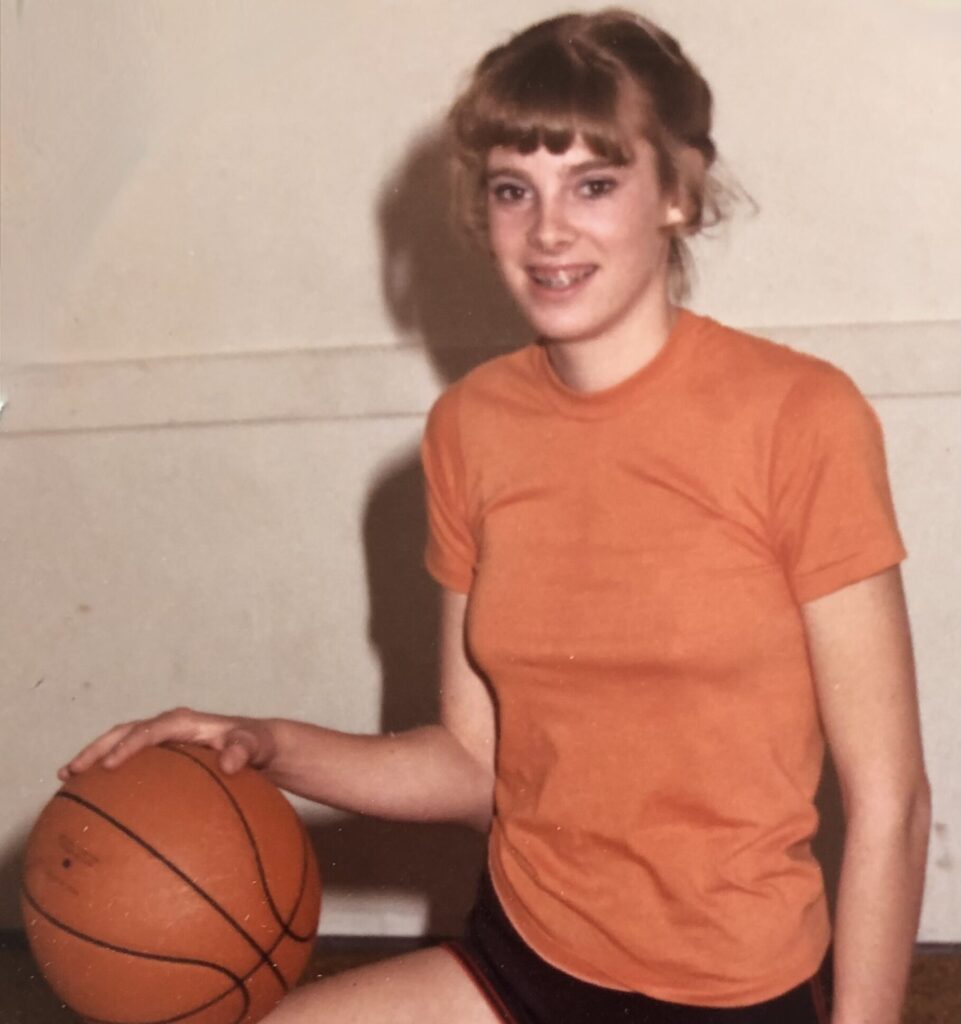
Later, I realized my safe space wasn’t my bedroom. It was any place I competed — a basketball court, volleyball court, tennis court, soccer field, gymnastics mat, or swimming pool.
I thrived in sports, but not for the reasons people might assume. It wasn’t really about fun. It was about structure.
At home, I was constantly monitoring everything — my dad’s mood, whether my mom had been drinking, the tension in the house, the subtle signs that told me whether I was safe or needed to disappear to a friend’s house. I became hyperaware of tone, footsteps, facial expressions, and volume.
Sports were different.
On a court, I could relax. I could try hard and be rewarded for it. If I practiced, I improved. If I worked harder, I scored more points, played better defense, earned more playing time. The relationship between effort and outcome made sense to me.
But what I loved most were the rules.
In sports, the rules are clear. Everyone knows them. Everyone agrees to them. Referees enforce them. And if the rules are broken, there’s a consequence.
If I got hacked on the arm while I was shooting, the whistle blew, play stopped, and the foul was recorded in the scorebook. There was an immediate consequence. I got two free throws — because the game recognized I’d been wronged.
And if a player broke the rules too many times, they were removed from the game entirely.
How amazing is that?
Rules. Enforcement. Consequences.
Everything my home lacked.
On the court, I didn’t have to guess who was angry, what I was walking into, or how to shape-shift myself to stay safe. I just got to play.
That said, I’ve played at a high enough level to know sports aren’t perfectly fair. Coaches have favorites, referees miss calls, and teammates don’t always get along.
But compared to my home life, sports felt orderly. Rational. Safe.
From the moment I stepped onto a basketball court as a little girl until I left home on a volleyball scholarship, that structure gave me something I desperately needed: relief.
I no longer need sports to survive, but I still love to compete. My worn-out knees — even after being replaced — ended my basketball and volleyball days. Luckily, I still play tennis.
No referees. Just rules, honesty, and the expectation that people will call things fairly.
Maybe that still appeals to the little girl in me who spent so much of her childhood wishing the world worked that way.