“I’m going to do drugs” is something I never thought I’d say.
I’ve never tried coke, mushrooms, angel dust, acid, or ecstasy. I grew up in the Nancy Reagan “Just Say No” era. And I strongly believed in it. Not in her so much, but definitely the don’t-do-drugs part.
I was 100% convinced that if I tried drugs, I’d probably like them, immediately become addicted, overdose, and then die. So I steered clear.
I did, however, smoke exactly one cigarette outside a Denny’s with my younger brother the morning of my wedding in 1990 because… well, it felt like an adult thing to do on an adult day. And… I smoked a second cigarette the morning of his wedding because, by then, it was a tradition.
So when a friend suggested I sign up for a psilocybin study, my first thought was, “No, I don’t do drugs.”
My second thought was, “What is psilocybin?”
And my third was, “What exactly are they studying?”
Turns out, psilocybin is the psychedelic compound found in magic mushrooms. Besides being on Nancy’s no-no list, they’re currently illegal under federal law.
But I looked into it. Researchers are studying whether psilocybin might help people struggling with the psychological effects of cancer, war, childhood abuse, and other traumatic experiences. Apparently, psilocybin might help the brain break old patterns of thinking.
So I signed up and was accepted into a study at a research clinic testing the safety and efficacy of psilocybin-assisted therapy for women experiencing PTSD related to sexual abuse.
I told a friend in her 70s about the study, and her response was, “I don’t see the big deal. I used to trip on mushrooms at every concert I went to in the ’60s. Didn’t do a damn thing for my trauma.”
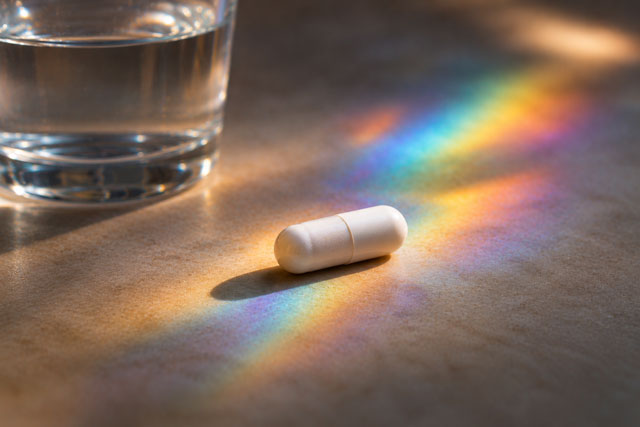
I’m certainly not the first person to trip on mushrooms, but what’s different about my upcoming trip is the intentional therapeutic aspect of it. I’ll meet with a therapist three times beforehand to talk about my trauma and set my intentions for the experience. Then I’ll take a psilocybin capsule and spend six or so hours tripping while two therapists sit with me, making sure I’m safe and offering support if difficult emotions or memories come up. Afterward, we’ll meet several times to help me process whatever I experienced.
And unlike the concertgoers of the ’60s, who I imagine drove home in their VW buses and station wagons while still tripping, I’ll have to be picked up by a responsible adult.
What I love about the study is that the support doesn’t end when the researchers have collected their data. I’ll have the opportunity to join an ongoing support group with other survivors who’ve participated in the study.
After finding out about the study, my friend asked, “Why do you want to do this? You seem so normal, so put together, so happy?”
But that’s the thing about childhood sexual abuse. You learn to mask, to adapt, to push aside feelings of insecurity, shame, self-hatred, and self-doubt. You pretend. You learn to act okay as a child to survive, and you carry that into adulthood to fit in, get ahead, and live a life that requires you not to fall apart. You seem normal, put together, happy.
I’ve done a lot of work over the years to heal from my childhood, but there are still parts of it that show up in my life in ways I wish it didn’t. And despite everything I’ve tried, there are things I still haven’t figured out how to move past.
I’m both excited and terrified about participating in this study. I have no idea how the psilocybin will affect me.
What I do know is that I will be giving up some control. And feeling in control is important to me after growing up having so little of it. I’ve spent my life learning how to manage my thoughts and emotions. I hold back tears because I learned that crying is a sign of weakness. And I avoid conflict because anger still feels like a threat, even when it isn’t.
It’s possible it won’t do much, and I’ll have a nice trip. Or a bad one.
It’s possible it will help immensely, perhaps in ways I hope for or in ways I never even imagined.
And it’s possible that temporarily letting go of the control I’ve relied on my entire life might teach me that I don’t always need it. Or remind me why I’ve held on to it so tightly.
Another reason I’m excited about participating is the possibility of helping others. I love knowing that whatever happens to me—good, bad, or meh—my experience will be part of research intended for future publication in a scientific journal. What the researchers learn could help therapists and social workers better understand whether psilocybin-assisted therapy can benefit survivors of sexual abuse, how it might help, and the most effective ways to provide it.
For years I thought I could fix what felt broken inside me. I recently told the doctor leading the study how much time I’ve spent in therapy, reading, and thinking about my trauma, trying to fix myself. And how exhausted I am from trying to think my way into feeling better. He pointed out that if thinking about it were enough, I would have fixed it by now.
But that’s the thing. I’m not broken. And now I might have an opportunity to rewire the parts of my brain that keep telling me I am.