
Last week a friend asked me how long it took to write my book. Like most authors, I get this question a lot. The answer is complicated.
What often goes through my mind isn’t how long it took, but how long it should have taken. Writing a memoir is not a linear process, especially one like mine that deals with complicated family relationships, childhood abuse, and trauma, including what felt like a thousand childhood stories that had to be written, edited, cut, rewritten, and then rewritten again.
In my mind, it should have taken me a year. It took several. I was lucky (or unlucky), depending on how you see it. I remember everything from my childhood—the details, like the names of every teacher I had in elementary school and what their shoes looked like. My husband often complains that I remember every fight we’ve ever had, and exactly where we were when we had it.
He’s not wrong.
But that’s the thing about an abusive childhood—you learn to pay attention to details and store them away to keep yourself safe. It’s a survival skill that, over time, becomes automatic. You remember so you can avoid certain situations, places, and people, so you won’t be harmed again. It helps. But it never makes you completely safe. The brain is built to remember what hurts.
We all do some version of this. We remember painful things more than the happy ones—or at least the emotions of them: the games we’ve lost over the ones we’ve won, the vacations that went bad over the ones that went perfectly, the bad date over the good one.
I suffer with those memories being “stuck” in my head, and I go to therapy to help me deal with the triggers and flashbacks that come when I don’t want them, or when they’re too intense to handle.
But for memoir writing, they’re a gift. When I wrote my memoir, I never had to refer to journals or diaries—which is just as well, because I didn’t have any. I could sit in a quiet place and let my mind go back to the memory. I was there—in the room, seeing the color of the wall, the wrinkles in a face, the smell of the cologne, feeling the energy in the room.
And that’s the beauty of writing a memoir. You re-experience what you’re remembering, but this time you’re safe. No one is there to gaslight you—to tell you that what you’re seeing and feeling isn’t true, that you’re overacting, or that it isn’t that bad. You have context now, and perspective that comes from time and experience.
I’m not saying it’s easy. It’s not. What it is, though, is healing. Re-experiencing the trauma—the shit, the abuse—is hard. But you come out the other side realizing the story you told yourself—that it was your fault, that you could have stopped it, that you misunderstood what was happening—was wrong.
But healing doesn’t make the doubt disappear. As you write, even if you have detailed memories, you still question them, mostly because you grew up being told that what you are seeing, feeling, and experiencing wasn’t true. And you believed it. That voice comes back as you write.
So this is why I didn’t write my memoir in a year, or whatever timeline felt like it should have taken. Because of the magic of the internet, I was able to research the places, people, and settings I wrote about and confirm that my memories were, in fact, correct. And that takes time.
Though the process of writing, I came to trust my memories.
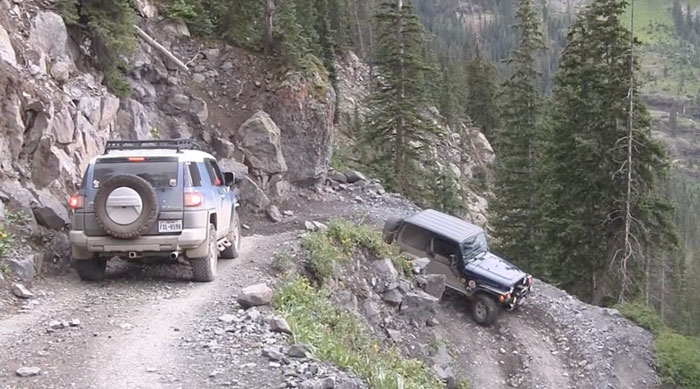
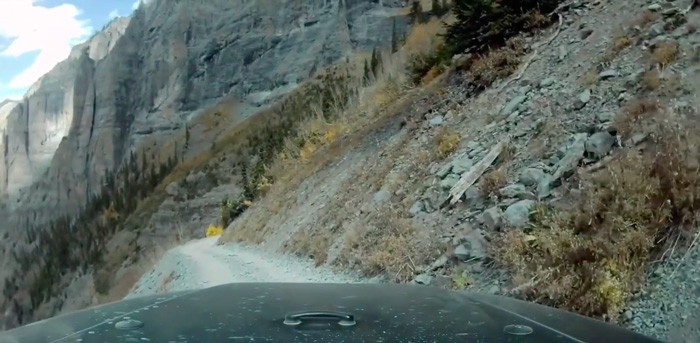
One story in my memoir is about a jeep trip my family took on the Western Slope in Colorado. We drove on a super dangerous trail, and my dad almost died. As I wrote about it, I worried that my memory had exaggerated how dangerous it was—how dangerous it felt. I told myself I needed to just finish writing and didn’t have time to research.
But then I caught myself. This wasn’t about getting words on a page. Taking the time to research wasn’t procrastinating reliving a painful story—it was part of the work. So I gave myself the gift of time. I spent a couple of hours looking up the trail online, researching its history, the ghost towns it passed through, and the real dangers others have experienced on it.
When I searched the name of the trail, the images that filled my screen matched—exactly—the ones I had in my head from more than 40 years earlier. The pitch of the trail, the cliff edge, the snow, and the hairpin turn were exactly how I remembered it.
I also learned that the trail is considered the most dangerous pass in the U.S., with a history of fatalities from jeeps plunging off the edge (trigger warning-video), including a 73-year old experienced guide and his two passengers who died there. This confirmed the fear I’d felt. I hadn’t exaggerated it. People have lost their lives on that trail.
What really got me was the sign at the start of the trail. It read, “YOU DON’T HAVE TO BE CRAZY TO DRIVE THIS ROAD – BUT IT HELPS. JEEPS ONLY.”
So yeah, I told myself it should have taken me a year to write my memoir. It didn’t. And I’m glad it took longer, because I let myself go on side trips—confirming what was true and finding a fuller, more honest, and more compassionate understanding of my childhood.
No therapy or motivational seminars or well-meaning conversations could have given me what writing a memoir did. I needed that extra time—to research, to learn, and to understand what I was too young to make sense of.