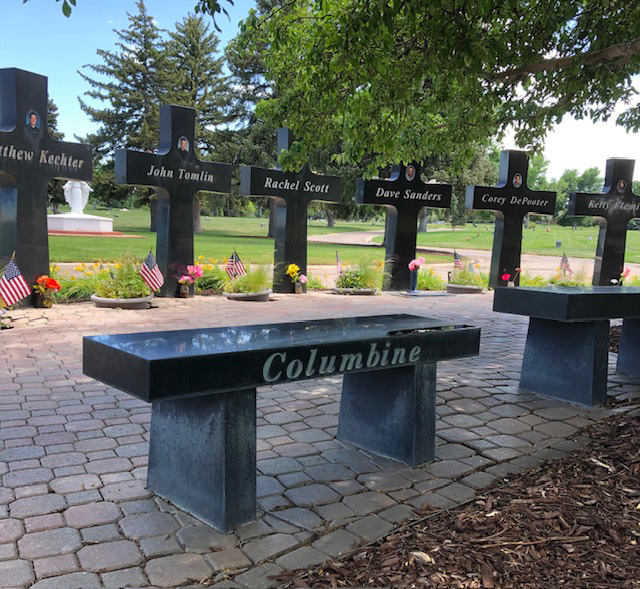
Twenty-seven years after the Columbine massacre, I found myself sitting in my high school math teacher’s kitchen, drinking wine with her and her husband late into the night.
That was not on my bingo card.
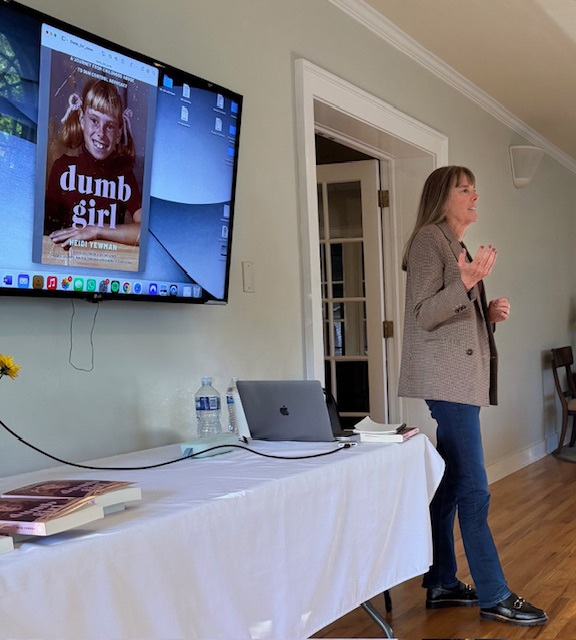
I was in Colorado for my spring book tour, and she had organized an event for me to speak about Dumb Girl. Afterward, we went back to her house and kept talking. Being there with her felt important—27 years to the day since 12 students and my former basketball coach were killed at Columbine High School. She was there that day at Columbine, an administrator shepherding kids to safety. Years earlier, she had been my math teacher.
My senior year, she pulled me aside and asked if I’d be interested in mentoring a freshman who was struggling with basic algebra. It seemed like a normal request. But it confused me because I barely made Cs in math.
She told me that’s exactly why she chose me.
“Straight A math students don’t know what it feels like to struggle,” she said. “It comes easy for them. They can’t explain things in a simple way. You can.”
Two weeks later, I was sitting in the library across from a sulky 14-year-old who hated math as much as I did, explaining how to solve for x—pretending I understood it better than I did.
We bonded over our hatred of math—and the tough family dynamics we were both navigating.
Slowly, something shifted.
I learned that I didn’t have to know everything—or be perfect—to help someone else. I knew how to break things down, sit with confusion, and keep going. I was doing it daily at home and at school.
But more importantly, I felt seen by my teacher.
She didn’t see me as a struggling math student; she saw someone who could connect, who could translate, who could sit with someone else in the discomfort of not getting it.
That changed something in me.
My perfectionism softened. My empathy grew—not just for classmates who were flunking, but for me, a student who often didn’t get it.
I didn’t think the girl I was mentoring was dumb because she didn’t understand algebra. And if I didn’t think that about her, I couldn’t think that way about myself.
That realization stayed. It softened how I move through the world—how I listen, how I tell stories, how I sit with people in hard places.
I’m forever grateful for that teacher—for seeing something in me I couldn’t yet see in myself, and for trusting me. And for the lifelong friendship we still share today.