
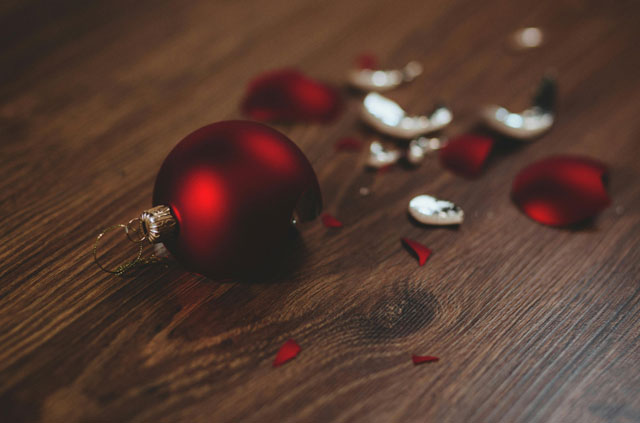
I remember sitting in church around this time of year when I was eighteen, desperately trying not to fall apart. I was in excruciating emotional pain and was fully aware of how happy I was expected to be. It was Christmas, for Christ’s sake—the most wonderful time of the year, or so the song says.
I usually loved Christmas—the music, the decorations, the festive nature, the traditions—all in anticipation of the big day. But not that year. I was miserable. It was the December of my senior year, and everything felt like too much. I was flooded with hormones, deep in the throes of high school senioritis (a real thing, btw), trying to survive an abusive home while still living in it, and slowly recovering repressed memories of sibling sexual abuse from years earlier. “Joy to the world” felt like it was meant for someone else.
There’s something about the holidays; the pageantry, the forced cheer, the reflectiveness tucked into the slow songs, and the end-of-year reckoning—that makes you reflect on a heaviness you can’t quite name, the kind so many people silently carry.
That year was the first time I remember thinking: the holidays are hard. And over the years I’ve learned I’m far from the only one. There are so many reasons people don’t like, actively dread, or simply struggle through this season. Here are six that occur to me:
Grief shows up louder. Holidays tend to spotlight who isn’t at the table anymore. Sights, smells, traditions, even the quietest moments can make loss feel painfully fresh. Many of my friends who’ve lost children to gun violence can attest to how excruciating this time of year can be.
Family dynamics resurface. Old patterns, unresolved tensions, or complicated histories can make gatherings feel anything but festive. I’ve had many Christmases where I experienced the joy of the season through my children’s eyes while at the same time stuffing down the resentment I still felt toward family members who had hurt me.
Pressure to be joyful. There’s a cultural script that holidays should be “the happiest time of the year.” If someone isn’t feeling that—because of stress, illness, loneliness, or just life—it can create shame or a sense of being out of sync with everyone else who, by the way, is smiling. Growing up in a toxic-positive family, I sure feel that one.
Financial strain. Gifts, travel, hosting, time off work—it all adds up. For many, the season stretches finances in ways that feel heavy or even embarrassing. Capitalism, am I right?
Overwhelm and Burnout. The pace ramps up—events, obligations, cooking, shopping, socializing. For introverts or those of us already stretched thin, the season can feel like way too much. I know my social battery starts to wane around December 10, and that’s in a good year.
Loneliness: Seeing cultivated images of togetherness everywhere—couples, families, big gatherings—can feel isolating even when we aren’t literally alone. For me, that’s part of the letdown I feel every year, even though I’m with my husband and kids, whom I adore. A heavy sense of loneliness can wash over me, followed by the familiar guilt that whispers, “What the hell is wrong with you? It’s Christmas, for Christ’s sake.”
I don’t have answers, just a recognition—recognition that holidays are hard, not for all of us, but for many of us. If you are struggling, I’m sorry. I see you. I feel you. And if I could go back to that eighteen-year-old girl sitting in church, trying not to fall apart, I’d tell her the same thing: you’re not broken. You’re just human. And holidays are hard.